
Can You Take a Dog in a Taxi or Chauffeur Car?
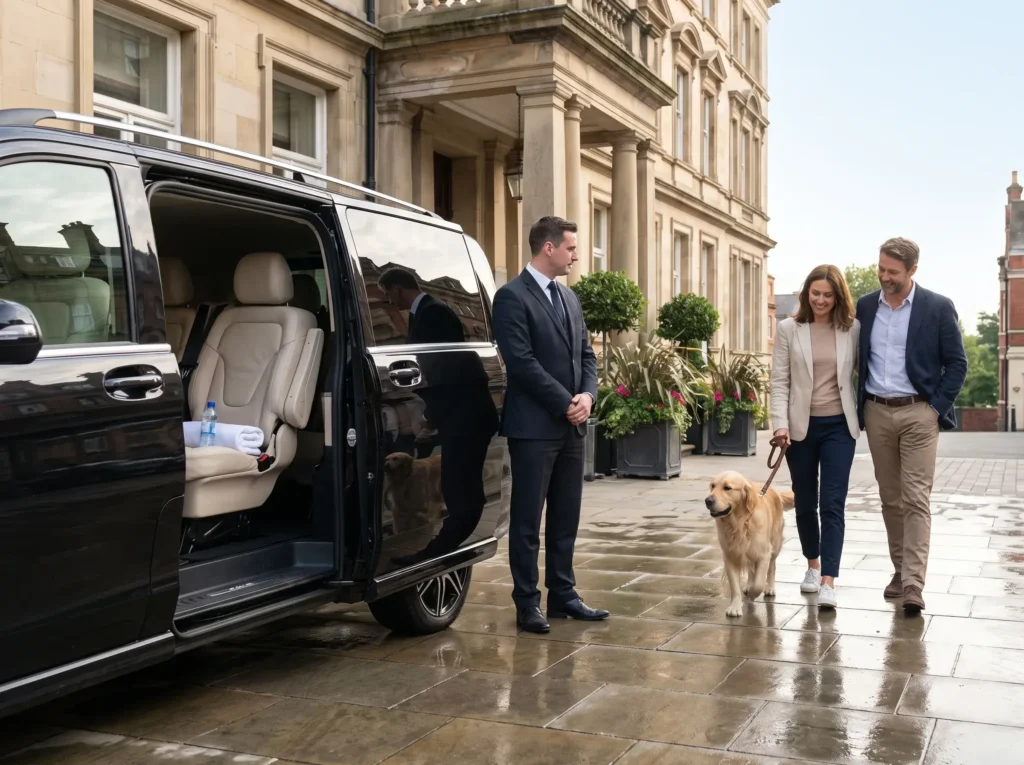
Assistance dogs: yes, always. It is illegal for any UK taxi or private hire driver to refuse an assistance dog. The fine is up to £1,000, and the driver can lose their licence.
Pet dogs: it depends on the driver. No UK taxi or private hire company is legally required to carry your pet dog. It is the driver’s discretion. Some will happily take your Labrador. Some will drive off the moment they see a lead in your hand. That uncertainty is why you are reading this page.
This guide covers the actual UK law, which taxi services accept dogs and which do not, what to do if you are refused, how to prepare your dog for the journey, and what alternatives exist when taxis are not reliable enough. If you need guaranteed pet-friendly transport for an airport transfer from Birmingham or any other journey, a chauffeur service confirms acceptance at booking. No surprises on the pavement.
What Does the Law Say? Assistance Dogs vs Pet Dogs
The Equality Act 2010 draws a clear line.
Assistance dogs (guide dogs, hearing dogs, dogs trained by Canine Partners, Dogs for the Disabled, or Support Dogs): every licensed taxi and private hire driver in the UK must carry them. No extra charge. No questions asked. The dog sits with the owner. The only exception is a driver who holds a medical exemption certificate from their local council, usually for severe allergies, which requires a doctor’s letter and council approval. These exemptions are rare.
There is no official registration or certification process for assistance dogs in the UK. Drivers cannot demand “proof”. Many assistance dogs wear a jacket, harness, or bandana identifying the charity that trained them, but there is no legal requirement for this. If a driver refuses your assistance dog, they are breaking the law.
Pet dogs (your family dog, your rescue, your working dog that is not an assistance dog): drivers can refuse. It is not illegal. It is their vehicle. They may have allergies. The next passenger may have allergies. They may have just cleaned the car. They may have had a bad experience with an unsecured dog scratching the leather. All valid reasons.
The practical reality: most black cab drivers in the UK will take a well-behaved dog, especially if asked politely. Most private hire drivers will take dogs if you call ahead. Most Uber drivers will not know about your dog until they arrive, and some will cancel. The difference between a smooth journey and a pavement standoff is preparation.
Which Taxi Services Accept Dogs? The Comparison Nobody Else Makes
| Transport Type | Pet Dogs Accepted | Assistance Dogs Required | Book in Advance | Extra Charge | Best For |
|---|---|---|---|---|---|
| Black Cab | Driver’s discretion | Yes, by law | Not usually | Sometimes | Hailing on the street, short trips |
| Private Hire | Company/driver discretion | Yes, by law | Yes, call ahead | Sometimes | Planned journeys: ask for pet-friendly driver |
| Uber | Driver’s discretion | Yes, by law | Via app, message the driver. | Uber Pet surcharge where available | Tech-savvy owners, short trips |
| Bolt | Driver’s discretion | Yes, by law | Via app, message the driver. | Not usually | Alternative to Uber |
| Addison Lee | Yes, with advance notice | Yes, by law | Yes, there’s a pet-friendly option in the app. | Not usually | London and surrounding areas |
| Dedicated Pet Taxi | Yes, always | Yes | Yes | Included in fare | Vet trips, anxious dogs, pet relocation |
| Chauffeur Service | Yes, confirmed at booking | Yes | Yes | Not usually | Airport runs, guaranteed acceptance |
| Train | Yes, it’s free | Yes | No advance notice needed | Free | Longer journeys, on lead or in carrier |
| Bus | Most operators, yes. | Yes | No | Free | Short local trips, on lead |
The takeaway: if you need certainty, book in advance with a company that confirms pet acceptance before the journey. If you are hailing a cab on the street with a Staffie, be prepared for a refusal and do not take it personally.
Can You Take a Dog in an Uber?
Three separate Reddit and Quora threads ask about Uber specifically. Here is the honest answer.
Standard Uber rides: the driver can refuse your dog. The app does not ask whether you have a pet when you book. The driver is assigned; they arrive, they see the dog, and they decide on the spot. If they refuse, you cancel and try again. That process can burn 20 minutes on the pavement with a confused dog.
Uber Pet: a pet-friendly option that launched in some UK cities. It shows drivers who have opted in to accept animals. There is usually a small surcharge (£3-5). The problem: Uber Pet is not available everywhere. Check the app. If the option does not appear in your area, it is not available.
What to do: book the ride, then immediately message the driver and say you have a dog. State the breed and size. Be upfront. If the driver is not comfortable, they cancel before they arrive, and you get reassigned. Better than a standoff outside your house.
Assistance dogs on Uber: the driver must accept them. If an Uber driver refuses your assistance dog, report through the app immediately. Uber’s policy states assistance dogs must be carried. Drivers who refuse face account suspension.
What Happens If a Taxi Refuses Your Dog?
If your dog is an assistance dog, the driver is breaking the law. Stay calm. Note the vehicle registration number, the driver’s licence number or badge (if visible), and the time and location. Report to your local council licensing team. They regulate taxi and private hire licences. Report to the taxi company or app (Uber, Bolt). File a complaint with Guide Dogs UK or the assistance dog charity that trained your dog. The driver faces a fine of up to £1,000 and risks losing their private hire licence.
If your dog is a pet dog, the driver is within their rights. It is frustrating, but it is not illegal. Do not argue. Do not force the dog into the car. Call the taxi company and ask for another driver who is pet-friendly. Try a different company. Or book a chauffeur service where pet acceptance is confirmed at booking.
The emotional reality is this: being refused with your dog feels personal. It is not. The driver may have a genuine allergy. The next passenger may have a severe allergy. The driver may have been fined before for dog hair in the vehicle. Treat it as a logistics problem, not a personal rejection.
Can a Dog Sit on Your Lap in a Car in the UK?
Rule 57 of the Highway Code states that dogs (and other animals) must be suitably restrained in a vehicle so they cannot distract the driver or injure themselves or others. A dog on your lap in the front seat is a distraction offence. A dog on your lap in the back seat of a taxi is not ideal either.
The safest options: a harness with a seatbelt clip (the dog sits on the seat, clipped to the seatbelt buckle). A pet carrier secured on the seat or footwell (best for small dogs). A dog guard between the boot and the back seat is best for large dogs in estate cars. Sitting with the dog in the back footwell (common in taxis and practical for medium dogs).
In a taxi specifically, the driver may have a preference. Ask before the dog gets in. Most drivers prefer the dog in the footwell or on a covered seat, not on your lap and not on the driver’s seat.
How to Prepare Your Dog for a Taxi Journey
Call ahead. Every time. State the breed and size. “I have a medium-sized Spaniel on a lead; is that okay?” gives the driver or dispatcher the information they need to say yes or send a pet-friendly driver.
Bring a blanket or waterproof mat. Lay it on the seat before the dog sits down. This protects the upholstery and shows the driver you respect their vehicle. It also reduces the cleaning fee risk if the dog sheds.
Use a harness with a seatbelt clip. The dog is restrained. The driver is reassured. The dog is safer in an emergency stop. Pet seatbelt harnesses cost £10-25 on Amazon. Worth every penny.
Do not feed the dog 2 hours before travel. Reduces the risk of car sickness. A dog vomiting in a taxi guarantees a cleaning fee and a very unhappy driver.
Bring wipes, bags, and a towel. For emergencies. Muddy paws, drool, or worse. Being prepared shows the driver you are a responsible owner.
Keep the dog on a lead at all times. Even getting in and out of the vehicle. An excited dog jumping out into traffic is the nightmare scenario every driver worries about.
For nervous or car-sick dogs: Adaptil calming spray (pheromone-based; spray in the car 15 minutes before the journey). A ThunderShirt for anxiety. A familiar blanket or toy from home. Ask the driver to keep a window slightly open for fresh airflow. Sit next to the dog in the back seat. Speak calmly. Short practice trips before the main journey help build tolerance.
Taking Your Dog to the Airport: The Multi-Stop Problem
This is the scenario nobody else on this SERP covers, and it is the most common reason dog owners need reliable pet-friendly transport.
You have a 7am flight from Birmingham Airport. Your dog needs dropping at a pet sitter in Solihull on the way. You have two suitcases, a cabin bag, and a Labrador who does not understand why she is going to someone else’s house at 4:30am.
A standard taxi might refuse the dog. An Uber driver might cancel when they see the luggage AND the dog. A second taxi from the pet sitter to the airport adds cost and complexity.
A chauffeur from Grand Executive handles it in one booking. You confirm the dog at booking. The driver arrives with boot protection. The dog goes to the sitter. The suitcases stay in the car. The driver takes you straight to the airport terminal. One vehicle. One booking. No refusal risk. No rebooking on the pavement at 4:30am in the dark.
The same works in reverse. You land at BHX at 10pm. The dog is at the pet sitter in Moseley. The chauffeur collects you from arrivals, drives to the sitter, waits while you collect the dog, and takes everyone home. One journey. Dog in the back seat, you in the passenger seat, luggage in the boot.
Dogs on Buses and Trains: A Quick Guide
Buses: most UK bus operators allow dogs for free. The dog must be on a lead. Must not sit on seats. Must not block the aisle. Guide dogs and assistance dogs go on the lower deck and sit with the owner. Some operators limit it to one dog per passenger. Check your local operator.
Trains: dogs travel free on all UK train services. Must be on a lead or in a carrier at all times. Must not sit on seats. No booking required. Assistance dogs travel in all areas of the train. Most train staff are dog-friendly.
Trams: same rules as buses. Dogs on leads. No seats. Free travel.
For short local trips, the bus or train is the easiest option. No advance booking. No refusal risk. No extra charge. The limitation is luggage: a dog plus two suitcases on a bus is impractical.
Are Dogs Allowed in Taxis in Other Countries?
Australia: varies by state. In Victoria, taxis must carry assistance dogs. Pet dogs are at the driver’s discretion. Many rideshare drivers in Sydney and Melbourne accept dogs with advance notice.
New York City (USA): Yellow cabs must accept dogs of all sizes. It is city law. The dog should be in a carrier or on a lead. Rideshare drivers (Uber, Lyft) can refuse pet dogs but must accept service animals under the ADA.
France: taxis must accept guide dogs. Pet dogs at the driver’s discretion. Small dogs in carriers are usually accepted. Large dogs are harder.
These are brief answers for international searchers. For detailed UK guidance, the sections above cover everything.
Is There Demand for Pet Taxis in the UK?
Yes, and growing. Dedicated pet taxi services operate in most UK cities. They transport dogs to vet appointments, groomers, doggy daycare, airports, and between homes in custody or relocation situations. Vehicles are modified with crates, guards, and non-slip flooring. Drivers are trained in animal handling.
Companies like AnimalCouriers, PetVehicle, and local operators serve this market. Prices are higher than standard taxis (£15-30 for a local trip vs £8-15 for a regular taxi), but acceptance is guaranteed and the vehicle is designed for animals.
For a one-off trip with your pet, a regular taxi with advance notice is fine. For regular vet runs with a nervous dog, a dedicated pet taxi or a chauffeur service you build a relationship with is worth the premium.
Frequently Asked Questions
Do taxis take dogs in the UK?
Assistance dogs: yes, by law. Pet dogs: driver’s discretion. Call ahead, ask for a pet-friendly driver, bring a blanket, and use a harness. Most drivers will say yes if you prepare properly and ask politely.
Can I take my dog in an Uber?
You can, but the driver may refuse. Message the driver immediately after booking to confirm. Uber Pet is available in some UK cities with a small surcharge. Assistance dogs must always be accepted.
Is there an extra charge for dogs in taxis?
For assistance dogs: never. It is illegal to charge extra. For pet dogs: some companies apply a small surcharge (£2-5) or a cleaning fee risk. Ask before you book.
What should I bring when taking my dog in a taxi?
A waterproof blanket or mat, a harness with a seatbelt clip, wipes, bags, a towel, and water for the dog. Do not feed the dog 2 hours before travel.
Can a taxi driver refuse my guide dog?
No. Refusing an assistance dog is illegal under the Equality Act 2010. The fine is up to £1,000, and the driver can lose their private hire licence. Report any refusal to your local council licensing team.
Can my dog sit on my lap in a taxi?
The Highway Code requires dogs to be suitably restrained. A dog on your lap in the front seat is a distraction offence. In the back seat, it is technically allowed but not recommended. A harness with a seatbelt clip or a carrier is safer for the dog and more reassuring for the driver.
What is the best transport option for a dog owner without a car?
For short trips: bus or train (free, dogs allowed on lead). For planned journeys: private hire with advance notice. For airport transfers or guaranteed acceptance: a chauffeur service in Birmingham with pet acceptance confirmed at booking. For regular vet trips with a nervous dog: a dedicated pet taxi service.
Are dogs allowed in taxis in Australia and the USA?
Australia: varies by state; driver’s discretion for pet dogs; assistance dogs must be accepted. New York City: yellow cabs must accept all dogs by city law. Rideshare drivers in both countries must accept service and assistance animals.