
Peaky Blinders Filming Locations: Where Was It Actually Filmed? The Complete Guide (2026)
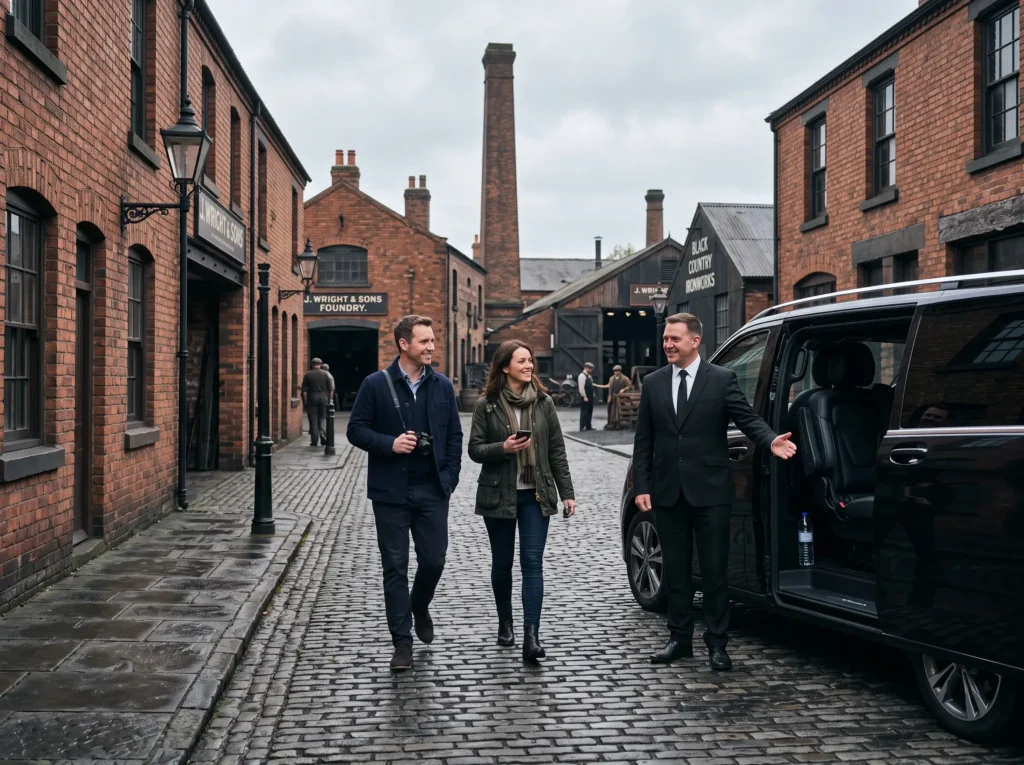
Peaky Blinders is set in Birmingham. Most of it was not filmed there. That is the fact every other guide dances around, and the reason fans arrive in Birmingham expecting Watery Lane and find Victorian terraces that look nothing like the screen. Here is the honest version.
The TV series (2013-2022) used Liverpool, Manchester, Yorkshire, and other locations across England to recreate 1920s Birmingham. The Black Country Living Museum in Dudley was the most used single filming location across the entire run. The streets of the Shelby home are Powis Street in Liverpool. The Garrison pub exterior was filmed in multiple locations, including Manchester.
The Immortal Man (2026, now streaming on Netflix) changed the equation. For the first time, the production used real Birmingham streets: Gas Street Basin, Cornwall Street and Margaret Street, Digbeth. The city the show has always claimed is finally partially visible on screen.
This guide covers every filming location across both the TV series and The Immortal Man. Where each scene was filmed. Which locations are visitable? How to get there from Birmingham. And for fans wanting to see multiple locations in one day, a Peaky Blinders tour from Birmingham by private chauffeur covers the key Midlands sites — BCLM, Gas Street Basin, Digbeth, and Cornwall Street — without the logistics of public transport between sites.
Where Was Peaky Blinders Filmed? The Short Answer
| Location | What It Represents | Visitable? |
|---|---|---|
| Black Country Living Museum, Dudley | Watery Lane, Charlie’s Yard, Shelby Company streets | Yes — official tours from 2026 |
| Powis Street, Liverpool | Watery Lane (Shelby family home exterior) | Yes — self-guided |
| Gas Street Basin, Birmingham | Canal loading scenes (The Immortal Man) | Yes — free |
| Cornwall Street, Birmingham | Tommy riding through Birmingham (The Immortal Man) | Yes — free |
| Digbeth, Birmingham | Production base and street scenes | Yes — self-guided |
| Little Germany, Bradford | Bomb-ravaged Birmingham (The Immortal Man) | Yes — free |
| Calke Abbey, Derbyshire | Tommy’s estate interior and outbuildings | Yes — National Trust |
| Calder Abbey House, Cumbria | Tommy’s estate exterior | Occasionally — private |
| Castlefield, Manchester | Garrison Tavern exterior | Yes — free |
| Pontcysyllte Aqueduct, Wales | Narrowboat journey (The Immortal Man) | Yes — boat trips |
| Stanley Dock, Liverpool | Charlie’s yard (TV series) | Yes — limited access |
| St George’s Hall, Liverpool | Grand interiors (various series) | Yes |
| Didcot Railway Centre, Oxfordshire | Nazi train scenes (The Immortal Man) | Yes |
Was Peaky Blinders filmed in Birmingham?
The TV series: mostly no. The Immortal Man: yes, significantly.
During the TV series run (2013-2022), the production team recreated 1920s Birmingham using locations across England that better preserved the period architecture. Birmingham had been heavily redeveloped by the time filming began. Victorian terrace streets that would have been authentic to 1919 were more accessible in Liverpool, Manchester, and Yorkshire.
The key exception throughout the entire TV series: the Black Country Living Museum in Dudley, 8 miles from Birmingham city centre. This 26-acre open-air museum preserved buildings dismantled from across the Black Country and rebuilt on the site. For the production, it was irreplaceable. Cillian Murphy said it had “become kind of one of the characters in the film and the TV show.” Steven Knight said, “We think of the museum as home.”
For The Immortal Man (2026), the production is based at Digbeth Loc Studios, a purpose-built film studio in Birmingham’s Digbeth district. Gas Street Basin was transformed into a 1940s industrial waterway. Cornwall Street and Margaret Street were used for the scene where Tommy rides a horse through the ravaged city. For the first time, the real Birmingham is visible on screen.
Black Country Living Museum: The Most Important Peaky Blinders Location
Address: Discovery Way, Dudley, DY1 4AL. Distance from Birmingham city centre: 8 miles, 20 minutes by car.
This is the single most important filming location in the entire Peaky Blinders franchise. The canal-side anchor forge and boat dock that doubles as Charlie Strong’s yard appears in every series and in The Immortal Man. The surrounding streets — period, terraced houses, shops, a pub, a working tramway — provided the visual backbone of the Shelby family’s world.
What to see: The canalside yard used for Charlie Strong’s scenes. The surrounding period streets are used for Watery Lane and the wider Shelby neighbourhood. The Dudley Canal and tunnel system that features in the narrowboat sequences.
Official Peaky Blinders Filming Tours (launched 2026): BCLM launched official guided filming location tours in 2026 following the release of The Immortal Man. These are real locations, not recreations. Guides walk visitors through the specific spots where key scenes were filmed with production context and behind-the-scenes information. Pre-booking is required. Check the BCLM website for current tour dates and availability.
Peaky Blinders Nights: The museum regularly hosts evening Peaky Blinders events with actors in period costume, entertainment, and access to the filming locations after hours. Check the BCLM events calendar.
Visiting information: Open Tuesday to Sunday. Adult from £22.95. Allow 3 to 5 hours minimum for the full museum. A separate tour booking is required for the Peaky Blinders filming experience.
Getting there from Birmingham: 8 miles by road. 20-25 minutes by car. Bus: the 87 service runs from Birmingham city centre to Dudley. From Dudley bus station, BCLM is a short walk or taxi. A Peaky Blinders chauffeur tour from Birmingham collects from your hotel, drives to BCLM, waits during your visit, and returns to Birmingham or continues to other locations.
Birmingham Filming Locations: The Immortal Man (2026)
These are the locations where Tommy Shelby is visible on the real streets of Birmingham for the first time.
Gas Street Basin
The junction of the Worcester and Birmingham Canal and the Birmingham Canal Old Line at Gas Street Basin was transformed into a 1940s industrial waterway for The Immortal Man. Vintage narrowboats, period signage, and careful set-dressing turned a well-preserved Victorian canal basin into the loading point for the Shelby narrowboat convoy. The narrowboats then pass through Bumble Hole Nature Reserve in Dudley before heading north.
Visiting: Free to visit. Central Birmingham, a 10-minute walk from Birmingham New Street station. The Tap and Spile pub on the Birmingham Canal Old Line marks the specific spot used for filming. The basin has good walking access from the towpath.
Cornwall Street and Margaret Street (Birmingham School of Art)
In The Immortal Man, Tommy Shelby rides a horse slowly through crowd-filled streets in a pivotal scene. This is the real Birmingham — Cornwall Street and Margaret Street, passing the decorative brickwork and terracotta tiles of the Birmingham School of Art building. The architecture needed almost no period dressing.
Visiting: Free to visit. A 10-minute walk from Birmingham New Street station through the city centre. The Birmingham School of Art building on Margaret Street is a Victorian terracotta masterpiece worth seeing regardless of Peaky Blinders.
Digbeth
The production based itself at Digbeth Loc Studios, a purpose-built facility in Birmingham’s Digbeth district. Digbeth High Street, with its Victorian brick warehouses and industrial architecture, also features in the film — the area needed almost no set dressing to look like early-20th-century Birmingham.
Visiting: Digbeth is a 15-minute walk from New Street station. It has developed significantly as a creative hub with independent bars, cafes, and street art alongside the Victorian architecture. Worth visiting as both a filming location and a neighbourhood in its own right.
Bumble Hole Nature Reserve, Dudley
The countryside through which the Immortal Man narrowboats pass before reaching Gas Street Basin is Bumble Hole Nature Reserve at Windmill End in Dudley. The Dudley Canal passes through the reserve, and the towpath is walkable.
Visiting: Free. Located in Dudley, near BCLM. Combine with a BCLM visit for a full day of Peaky Blinders filming locations from Birmingham.
Birmingham Self-Guided Walking Tour
All four central Birmingham locations are within a 90-minute walk from New Street station.
Start at Birmingham New Street station. Walk west along Stephenson Street past the Bullring towards Gas Street Basin (10 minutes). Spend 20 minutes at the basin — walk the towpath, find the tap and spile, and look along the Birmingham Canal Old Line where the narrowboats were loaded.
Walk north along the canal towpath past Brindley Place (15 minutes) to the Jewellery Quarter direction, then back south through the city centre towards Margaret Street. Birmingham School of Art on Margaret Street (15 minutes walk from Gas Street Basin). Walk into Cornwall Street — this is the street Tommy rides down.
Continue to Digbeth (15 minutes’ walk southeast from the city centre). Walk Digbeth High Street and the surrounding warehouse district.
Total walk: approximately 4 miles, 90 minutes at a steady pace with stops. A Peaky Blinders tour from Birmingham by chauffeur covers this circuit and adds BCLM (8 miles out) as a full-day itinerary without the walking between sites.
Tommy Shelby’s Mansion: Where Is It in Real Life?
This comes up on Reddit and is one of the most searched PAA questions.
Tommy’s isolated, crumbling estate in The Immortal Man is built from two separate locations. The exterior — with the ruins of the old abbey and its cemetery — is Calder Abbey House, an 18th-century house built alongside the remnants of the 12th-century Calder Abbey at Calder Bridge, north of Seascale in Cumbria. It is Grade I-listed, privately owned, and cared for by a team of volunteers. It is occasionally open for visits. Check the Calder Abbey Facebook page for current access.
The outbuildings, stable yard, and many interiors — including the schoolroom where Tommy writes his memoirs — are Calke Abbey, a National Trust property near Ticknall in Derbyshire, approximately 45 minutes from Birmingham.
Calke Abbey visiting information: Open Wednesday to Sunday, seasonally. Adults from £15.50. The house is preserved in a deliberately unrestored state — peeling paintwork, overgrown courtyards, and accumulated objects of two centuries of occupation. It is one of the most atmospheric National Trust properties in England regardless of its Peaky Blinders connection.
Getting there from Birmingham: 45 minutes by car via the A38 towards Derby, then the A514. A chauffeur can collect from Birmingham city centre, drive to Calke Abbey, wait during the visit, and return — Grand Executive Chauffeurs covers Derbyshire as part of their long-distance day trip service.
Where Is the Garrison Pub in Peaky Blinders?
The Garrison Tavern interior is a studio set. The exterior has been filmed in multiple locations across the series and The Immortal Man.
In The Immortal Man, the Garrison exterior is at the junction of Duke Street and Castle Street in Castlefield, Manchester — beneath the railway viaduct that carries rail lines over the historic canal district. The Victorian pillars and brick archways create the same gritty industrial atmosphere the production uses throughout.
The original TV series Garrison exterior was filmed in various Liverpool locations and occasionally in Manchester. The interior remained a studio set at all times.
Castlefield visiting: Free to visit. A 20-minute walk from Manchester Piccadilly station through Deansgate. The area around Castlefield is worth exploring for Victorian industrial architecture.
Where Was Polly’s House Filmed?
Polly Grey’s house (Aunty Pol) was filmed at various Liverpool locations across the series. The domestic interiors of all the Shelby properties were studio sets. The narrow terraced streets shown in establishing shots are primarily Liverpool and occasionally Manchester locations that preserved the period architecture lost from Birmingham
Other Key Filming Locations
Little Germany, Bradford
The bomb-ravaged Birmingham streets visited by Ada Thorne (Sophie Rundle) in The Immortal Man are actually Bradford’s Little Germany district — beautifully preserved 19th-century merchants’ warehouses that required digital manipulation and set-dressing to appear bomb-damaged. An irony the location name provides for free.
Visiting: Free. Bradford city centre, 10-minute walk from Bradford Forster Square station. The German textile merchants’ warehouses are genuinely worth seeing.
Pontcysyllte Aqueduct, Wales
The narrowboat convoy passes high above the Wrexham countryside on the Pontcysyllte Aqueduct — the longest aqueduct in Britain and the highest canal aqueduct in the world. A UNESCO World Heritage Site.
Visiting: Boat trips across the aqueduct available. Walking the towpath across the aqueduct is free and extraordinary. Approximately 2 hours from Birmingham via the A5.
Calke Abbey, Derbyshire
Already covered above as Tommy’s estate. Worth noting that the Schoolroom is the specific room where Tommy writes his memoirs — it is accessible as part of the standard National Trust visit.
Didcot Railway Centre, Oxfordshire
The “German” train carrying counterfeit banknotes departs from what is actually the Didcot Railway Centre—a preserved Great Western Railway engine shed turned rail museum in Oxfordshire. Approximately 90 minutes from Birmingham via the M40.
Visiting: Open weekends and school holidays. Adult: £14.50.
St George’s Hall, Liverpool
Glimpsed briefly in The Immortal Man when a bomb appears to fall on “Birmingham”. The neoclassical exterior of St George’s Hall provides the grand civic backdrop. More significantly used in the TV series for various interior scenes.
Visiting: Public tours available. Free to enter the exterior.
Is Peaky Blinders Based on a Real Story?
Yes, partially. The Peaky Blinders were a real Birmingham street gang active in the late 19th and early 20th centuries, known for sewing razor blades into the peaks of their flat caps. The gang dissolved before the 1920s setting of the TV series. Steven Knight’s drama is inspired by the historical gang but the Shelby family, the specific storylines, and the main characters are fictional.
The real Garrison Tavern exists at Small Heath, Birmingham — a pub at the location that inspired the fictional pub. It is accessible as a regular pub, not a tourist site.
The Birmingham Back to Backs — a row of preserved 19th-century back-to-back houses managed by the National Trust near Hurst Street in Birmingham — represents the authentic housing type the Shelby family would have lived in. They are not a filming location but an authentic context for the world the show depicts.
Visiting: National Trust, pre-booked tours only. Adult £9.
How Historically Accurate Is Peaky Blinders?
The period atmosphere is meticulously researched — costumes, vehicles, music, social detail. The political context (post-WWI disillusionment, rise of British fascism, IRA activity, the Communist movement) is historically grounded if dramatised.
The specific gang behaviour, the Shelby family’s rapid rise, and many of the political storylines are fictional or heavily compressed from historical reality. The real Peaky Blinders were much smaller in scale and scope than their televised counterparts. Tommy Shelby as a character draws on multiple real figures without being directly based on any single person.
A 2-Day Peaky Blinders Itinerary from Birmingham
Day 1: Birmingham and the Black Country
Morning: Gas Street Basin and the canal walk. Cornwall Street and Birmingham School of Art. Digbeth High Street.
Afternoon: Black Country Living Museum (8 miles from city centre). Official Peaky Blinders filming tour (pre-book). Charlie Strong’s yard. Period streets. Canal basin.
Evening: Return to Birmingham. Broad Street or Brindleyplace for dinner near the canal.
Day 2: Calke Abbey and Liverpool
Morning: Drive to Calke Abbey, Derbyshire (45 minutes from Birmingham). Tommy’s estate interiors. Schoolroom. Stable yard.
Afternoon: Drive to Liverpool (45 minutes from Calke Abbey area). Stanley Dock. Powis Street (Watery Lane/Shelby home exterior). St George’s Hall. Formby Beach (if time allows).
Evening: Liverpool or drive back to Birmingham (90 minutes).
A Peaky Blinders chauffeur tour from Grand Executive covers this two-day itinerary with a named driver handling all navigation, waiting at each location, and collecting from the return point.